
Starship reached orbit for the first time on Monday morning, on the fourteenth flight of the programme and eighteen years to the day after SpaceX first put anything in orbit at all. Ship 41 lifted off from Starbase at 7:48 a.m. Central on top of Booster 21, released 26 operational Starlink V3 satellites about half an hour later, and was back in the Pacific three hours and eight minutes after launch, roughly six and a half hours earlier than the flight plan called for. Every previous Starship flight had been deliberately suborbital.
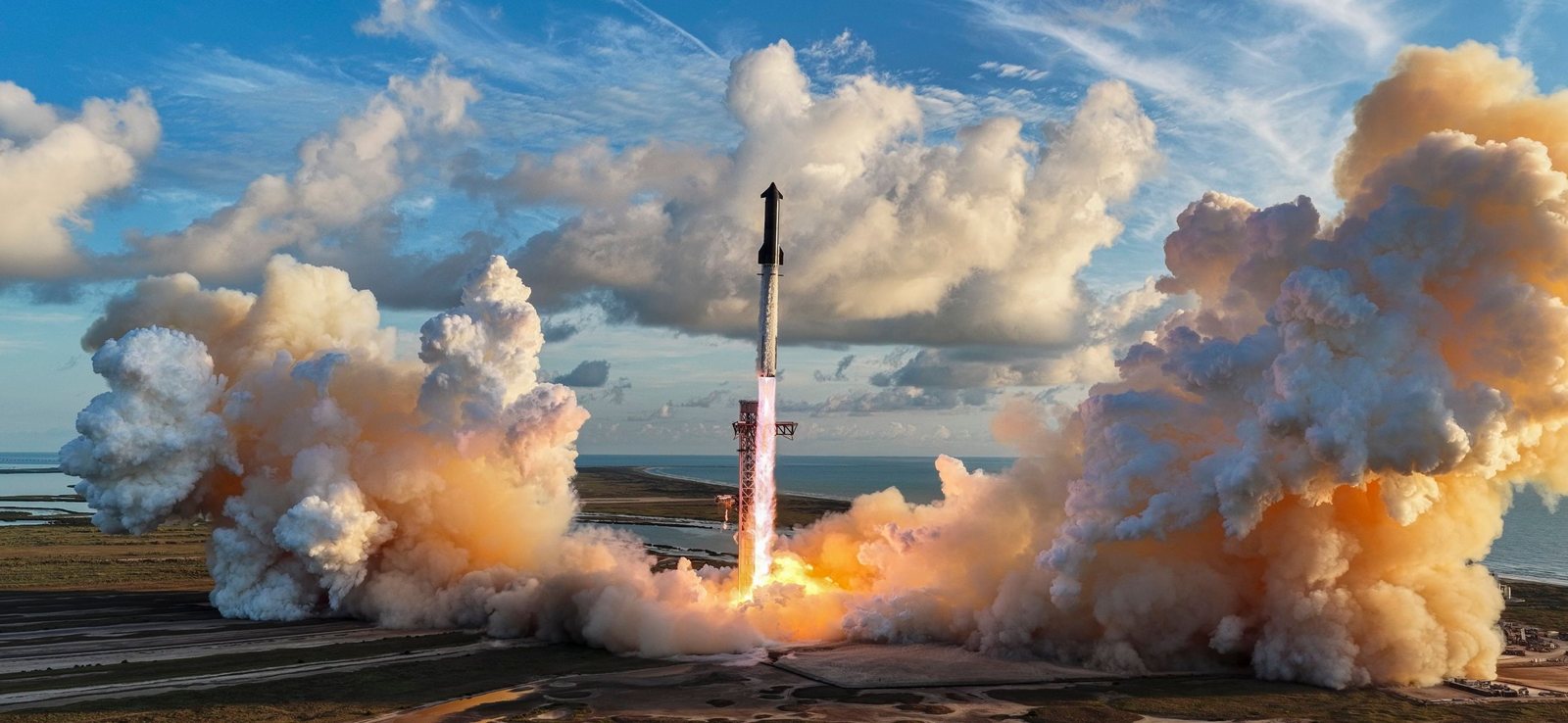
It nearly did not happen. During the upper stage's ascent burn one of its Raptor Vacuum engines shut down early, and SpaceX spokesperson Dan Huot told the webcast audience that the orbital attempt was off, only for the call to be reversed a few minutes later. SpaceX's own account explains why: the ship compensated by burning its remaining five engines longer than planned, still hit what the company calls a "passively safe" suborbital trajectory, and only then did the flight control team check the three sea-level Raptors needed for the rest of the mission, find them healthy, and give a go for orbital operations. "Starship is orbital," mission control said, to cheering at Starbase. Elon Musk posted: "First orbital flight of Starship successful!"
The most interesting things about this flight are not in the coverage, they are in SpaceX's own post-flight write-up, which reads like a test report because that is what it is.
Take the booster's boostback burn. Super Heavy relit 31 of a planned 33 engines, which sounds like a shortfall, but SpaceX says the burn itself was intentionally designed to run the booster's main oxygen tank dry, deliberately pushing to the limit of what the stage can do before future missions try to fly back to the launch site. The landing burn then lit 11 of a planned 13 engines, stepped down to five to fine-tune the trajectory, then to three, and put the booster on the water in the Gulf.
Then the part almost nobody reported: after the landing burn shut down, SpaceX triggered the booster's flight termination system on purpose, as a demonstration of the safety hardware. The explosion you may have seen at the end of the booster's flight was not a failure. It was an item on the test card.
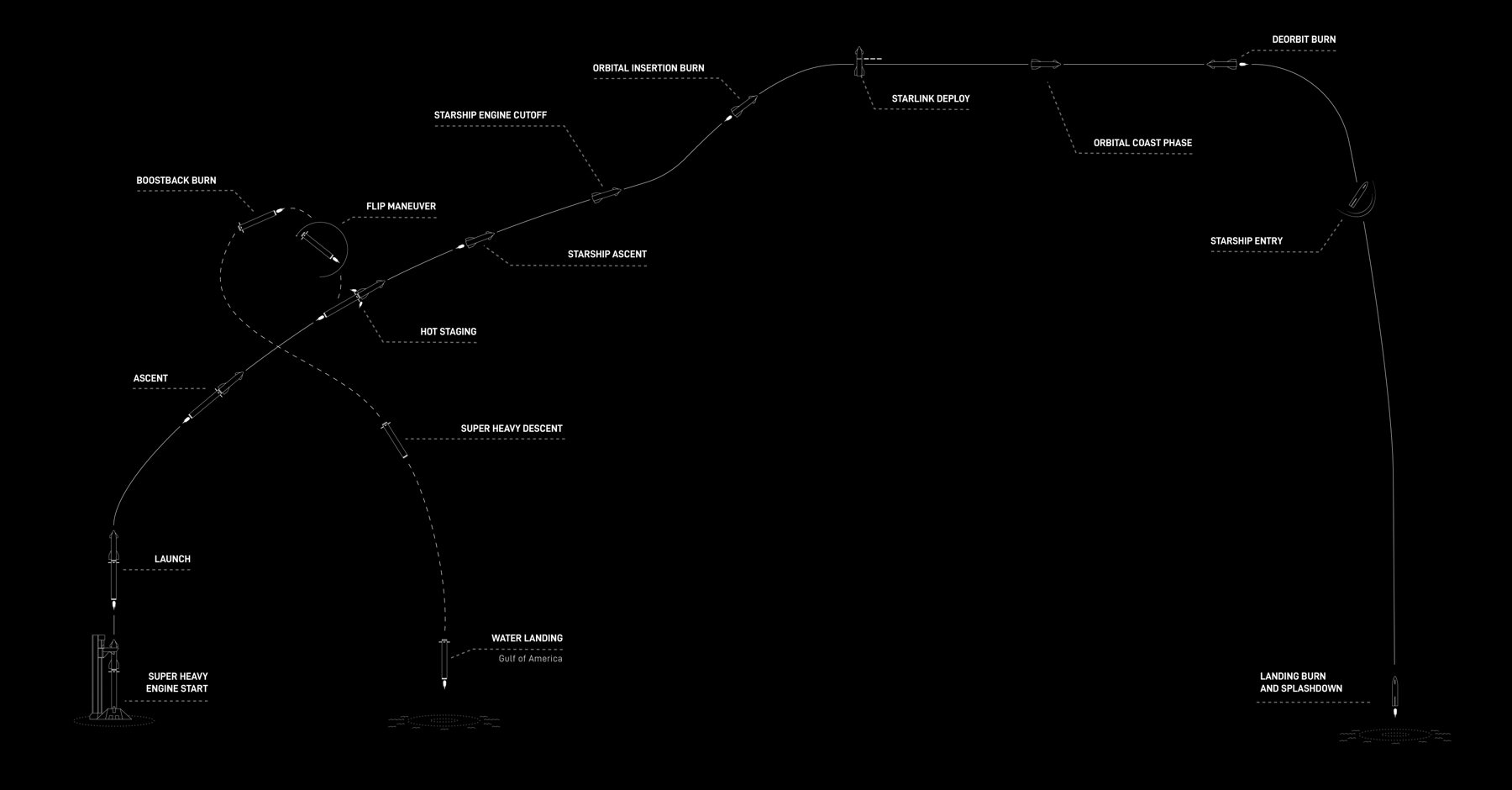
The same goes for the ending. Ship 41 splashed down intact in the northern Pacific, then toppled over and exploded on contact with the water, which is what happens to a vehicle that has no recovery ship and no intention of floating. The splashdown zone was one of two areas cleared of sea and air traffic before launch, which is why bringing the landing forward by six hours was possible at all.
Three of the 26 satellites were not ordinary Starlinks. They carried cameras, pointed back at Ship 41, and their job was to photograph the ship's heat shield tiles while it was in orbit. SpaceX will use the imagery to work on the tiles that have been the programme's most stubborn problem. It is a neat piece of improvisation: the payload inspects the rocket that delivered it.
The deployment itself ran from T+34:07 to T+1:04:39, which works out at about one satellite a minute for half an hour, released through the slot in the ship's side that everyone at SpaceX calls the PEZ dispenser. The detail worth pausing on is what came next. SpaceX says contact was established with every satellite shortly afterwards over laser links, ground stations "and Starlink user terminals" — meaning ordinary customer dishes on the ground were part of confirming that a brand new satellite was alive.
| Milestone | Planned | What happened |
|---|---|---|
| Booster ascent | All 33 Raptor 3 engines | One shut down during the climb; ascent still successful |
| Boostback burn | 33 engines relit | 31 relit, and the burn was deliberately extended to run the booster's main oxygen tank dry as a limits test |
| Booster landing | 13 engines, down to five, then three | 11 relit, then five, then three, splashdown in the Gulf — after which SpaceX triggered the flight termination system on purpose |
| Ship ascent | Six Raptors | One Raptor Vacuum shut down early; the other five burned longer to make up the thrust |
| Orbit insertion | Single sea-level Raptor at T+25:17 | Went ahead after the flight control team cleared the three sea-level engines. First Starship in orbit |
| Payload deploy | T+34:07 to T+1:04:39 | All 26 Starlink V3 satellites away, roughly one a minute |
| Deorbit | T+8:52:37, after about six orbits | Brought forward by roughly six hours "out of an abundance of caution" |
| Splashdown | T+9:50, off the coast of Chile | T+3:08, northern Pacific — the second of two pre-cleared zones |
For a fun fact, look at the date. Falcon 1 reached orbit on 28 September 2008, on the fourth flight of a company that was nearly out of money, carrying a 165-kilogram lump of metal called RatSat because there was no real payload to risk. Eighteen years later to the day, the same company's much larger rocket reached orbit for the first time carrying 26 working satellites. Nobody at SpaceX has said the date was chosen. It is a good coincidence either way.
There are smaller easter eggs in the published material. SpaceX's official countdown lists the event at T-0 as "EXCITEMENT GUARANTEED" and the last line of the flight timeline as "AN EXCITING LANDING!". The flight report has the booster ascending over "the Gulf of America". And at the time of writing, the timeline still shows the original nine-hour-fifty-minute profile with a deorbit burn at T+8:52:37, next to a write-up explaining that the deorbit happened hours earlier — the plan and the flight, side by side on the same page.
Now the satellites, which are the actual point of the mission. Starlink V3 is the first Starlink generation too big for Falcon 9, so it exists only because Starship does. SpaceX says each one supports 1 terabit per second of downlink and 160 gigabits per second of uplink, about ten times and twenty-two times the V2 satellite. The phased arrays carry 2,048 beams in each direction, against 192 down and 144 up on V2, fed by a new generation of SpaceX-designed beamformer chips and modem chips the company says handle around 64 times the throughput each.
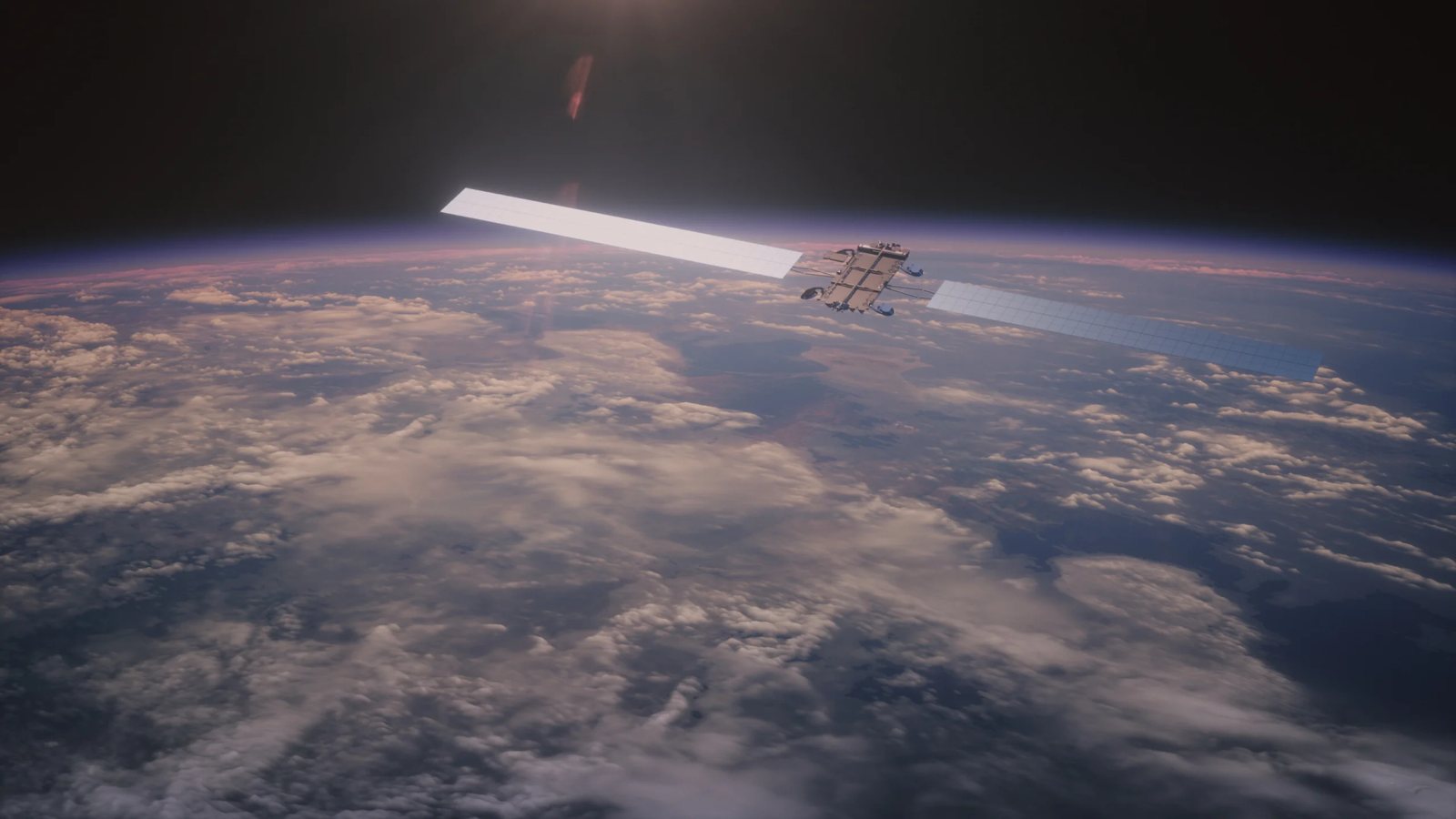
The rest of the specification is the part that makes it a network node rather than a transponder. Each V3 has six 400-gigabit laser terminals, which SpaceX describes as forming "a petabit laser mesh network" between satellites. Each also carries four quad-band radio backhaul antennas working across Ka, E, V and W bands for 1.2 terabits per second of backhaul, more than eight times V2. The solar arrays generate roughly twice the power of the previous generation and are made by cutting a continuously produced blanket into 19-metre lengths and stitching four of them together. SpaceX has not published the satellite's mass or dimensions, and outside estimates vary too widely to be worth printing. What it will say is that a single Starship launch delivers about 20 times the constellation capacity of a Falcon 9 launch of V2 satellites.
So: was there a storage array on board, or any compute hardware? No. Everything that left the payload bay was a communications satellite, and the only computers that went to orbit are the ones inside them. But the question is closer to the mark than it looks, because SpaceX's own V3 page ends by pointing somewhere else: the innovations in solar array technology, it says, "will also help power our AI satellite constellation, Starmind."
Starmind is the orbital data centre programme, and it is a good deal more than a slogan. On 30 January 2026 SpaceX filed with the FCC for authority to launch and operate a non-geostationary system of up to one million satellites, to be known as the SpaceX Orbital Data Center system, operating between 500 and 2,000 kilometres in 30-degree and sun-synchronous orbits; the Space Bureau accepted the application for filing on 4 February. Musk confirmed the Starmind name in June. SpaceX's own website now lists Starmind in its navigation bar, alongside Starlink, Starshield and Terafab, the chip factory the company is building in Texas. First prototype hardware is reported for 2027, so nothing about it flew on Monday.
The link between the two programmes is more than branding, though. A compute constellation needs enormous solar arrays, laser links to move data between satellites, and a rocket that can loft the whole thing in bulk. Flight 14 demonstrated the third of those with real hardware, and the satellites it deployed carry the first two. Whatever you think of a million orbiting servers as an idea, Monday was the day the launch half of it stopped being a slide.
What is left is still substantial. SpaceX has caught Super Heavy with the tower's chopstick arms on three flights, but has never tried to catch a Ship, and has said it may attempt one on Flight 15 depending on how this went. Orbital refuelling, the thing every Moon and Mars plan depends on, has not been demonstrated at all. And the heat shield still needs work — which is exactly why three of Monday's satellites spent their first minutes in space taking pictures of it.