
Apple has now made four Pro Maxes in four years, and until this month they all cost the same. The iPhone 15, 16 and 17 Pro Max all launched at $1,199, and apart from the 15 Pro Max's 6.7-inch screen, which grew to 6.9 inches on the 16 and has stayed there, they are the same size. The iPhone 18 Pro Max launched on 9 September at $1,299, alongside the folding iPhone Duo at $1,999. This piece lines up all five using only the figures Apple itself publishes, taken from each generation's launch release and the spec matrix on Apple's compare page, and answers the question most owners actually have: is it time to replace the phone you already carry?
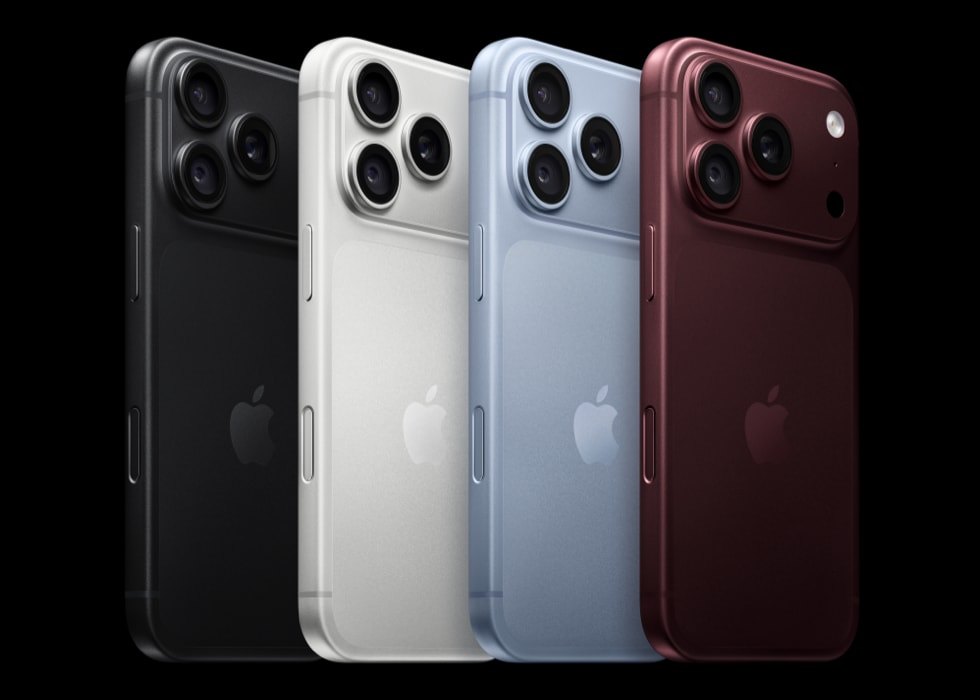
Start with the number that has moved most. Apple rates video playback at up to 29 hours for the 15 Pro Max, 33 for the 16, 39 for the 17 and 45 for the 18. That is 16 hours across three generations, a little over half again, and no step is smaller than four hours. On streamed video, which is harder on a battery because the radio stays busy, the same four phones rate 25, 29, 35 and 40 hours. The Duo is rated two ways: up to 31 hours on its inner screen and 44 on its outer one.
Charging has moved almost as far, and it is the change owners notice every day. The 15 and 16 Pro Max reach 50 percent in about 35 minutes on a 20W adapter. The 17 Pro Max does it in about 20 minutes on a 40W adapter, and the 18 Pro Max in around 15 minutes on a 60W one. MagSafe went from 15W on the 15 Pro Max to 25W on every model since, the Duo included. Apple lists those adapters as sold separately, so the faster figures assume a charger you may not own yet.
The other changes arrived a generation at a time. The 16 Pro Max added the Camera Control button and a 48MP ultra wide camera. The 17 Pro Max made all three rear cameras 48MP, raised the front camera from 12MP to 18MP with Center Stage, moved the front glass to Ceramic Shield 2, and replaced the titanium frame with an aluminium unibody. The 18 Pro Max adds a variable aperture, with mechanical blades stepping the main camera from f/1.48 to f/4, and the A20 Pro on a 2-nanometre process, with a 7-core GPU and what Apple calls a dual 16-core Neural Engine. All five are rated water resistant to six metres for up to 30 minutes, and all five have a USB-C port with USB 3 speeds.
| Phone | Launch price | Chip | Rear cameras | Front | Weight | To 50% charge |
|---|---|---|---|---|---|---|
| iPhone 15 Pro Max | $1,199 | A17 Pro | 48MP main, ultra wide, telephoto | 12MP | 221 g | 35 min · 20W |
| iPhone 16 Pro Max | $1,199 | A18 Pro | 48MP main and ultra wide, telephoto | 12MP | 227 g | 35 min · 20W |
| iPhone 17 Pro Max | $1,199 | A19 Pro | 48MP ×3 | 18MP | 233 g | 20 min · 40W |
| iPhone 18 Pro Max | $1,299 | A20 Pro | 48MP ×3, variable aperture | 18MP | 249 g | 15 min · 60W |
| iPhone Duo | $1,999 | A20 Pro | 48MP ×2, no telephoto | 12MP | 254 g | 20 min · 60W |
There is a weight trend under all of this. The 15 Pro Max weighs 221 grams, the 16 weighs 227, the 17 weighs 233 and the 18 weighs 249. The last step is the largest: the 18 Pro Max is the same 8.75mm thick as the 17 but 16 grams heavier. Apple does not say where the extra weight went. The Duo, at 254 grams, is heavier still.
Price has been flatter than any of it. Three generations launched at $1,199 before the 18 Pro Max went to $1,299, a $100 increase that Apple's announcement does not set against the old price. The Duo sits at $1,999, which is $700 more than the 18 Pro Max it shares a chip with.
So, by starting point.
If you have a 17 Pro Max, keep it. The 18 gives you six more hours of rated playback, faster charging if you buy a 60W adapter, the variable aperture and a newer chip, for $100 more than you paid and 16 grams more in your pocket. Those are real improvements. They are not the kind that make a year-old phone feel old.
If you have a 16 Pro Max, you are two generations behind, and that is where replacing starts to add up: 12 more hours of rated playback, a half charge in about 15 minutes instead of 35, a 48MP telephoto, an 18MP front camera and the aperture. Against that, you give up the titanium frame and carry 22 grams more. If your battery still holds a day, another year costs you very little. If it does not, the 18 Pro Max is the one to buy.
If you have a 15 Pro Max, the case is strongest. Three generations of changes land at once: 16 more hours of rated playback, half a charge in about 15 minutes against 35, MagSafe at 25W rather than 15W, Camera Control, 48MP across all three rear cameras, the 18MP front camera, Ceramic Shield 2 and the aperture. Apple's compare page still lists Apple Intelligence and the new Siri for the 15 Pro Max, so software support alone is not a reason to move. The 17 Pro Max is a reasonable middle route, but Apple no longer sells it new, and its compare page lists it only through authorised resellers, so what you would pay depends on who is selling.
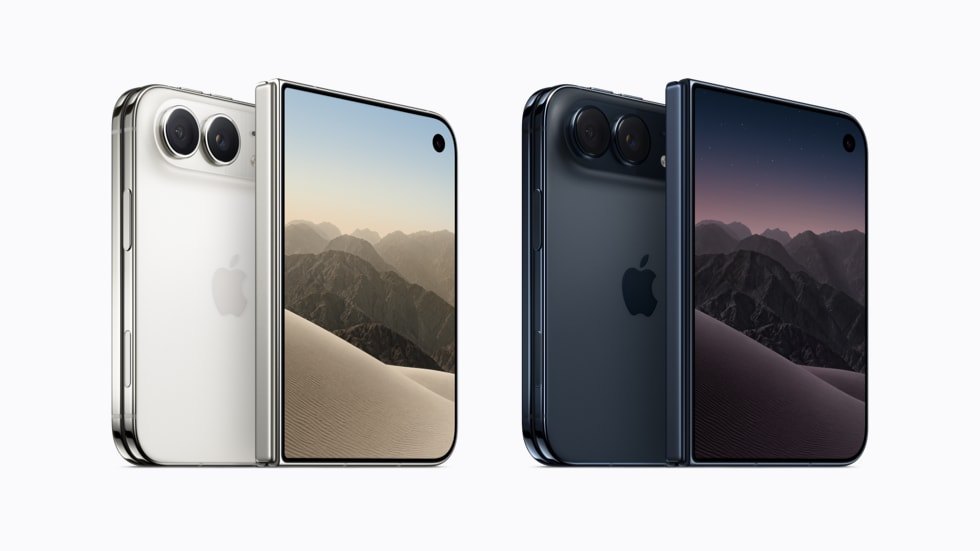
The Duo is a different purchase, not an upgrade. It has the same A20 Pro as the 18 Pro Max and a 7.6-inch inner display against 6.9 inches on the Pro Max. It also has no telephoto camera, since its rear system is a 48MP main and a 48MP ultra wide; a 12MP front camera against 18MP on the 17 and 18 Pro Max; and an inner-screen battery rating below the 16, 17 and 18 Pro Max. Buy it for the screen. On specifications alone, the 18 Pro Max is more phone for $700 less.
One thing is missing from all of the above on purpose. Apple does not publish memory (RAM) or battery capacity in mAh for any of these phones, and figures for both circulate widely, usually from teardowns or leaks. Some comparisons are built around them, particularly the argument that a jump in memory is the real reason to upgrade. We have left them out because they cannot be checked against Apple's own materials, and the 18 Pro Max and the Duo have not reached buyers yet, so nobody outside Apple has opened one. Every figure here is Apple's, and every battery and charging figure is a rating Apple measured under conditions Apple chose. They become measurements when independent tests arrive.