
Phison Previews an SSD That Runs AI Frameworks on Its Own NPU
Everyone's going all in on AI, so SSD manufacturers were not going to be left behind.
Why am I seeing this Ranked on source trust — TechPowerUp
It ranks mainly on source trust: TechPowerUp is the most reliable outlet we track on this subject, and is the only one on the story so far.
Single-sourced. No second organisation has confirmed it yet.
Link-outLink-out, because only one organisation carries it and no first-party source is on it. Link-out means we point at the publisher and say nothing of our own.
| Factor | Weight | Score | Contribution | Where it came from |
|---|---|---|---|---|
| Corroboration | 0.35 | 0.39 | +0.135 27% | 1 independent org on the story. Tier-3 aggregators never corroborate — they can show something is circulating, never that it is true. |
| Source trustleads | 0.25 | 0.80 | +0.200 39% | TechPowerUp is the highest-trust source on this story. Trust is taken from the best source, not averaged. |
| Pickup rate | 0.20 | 0.00 | +0.000 0% | One counted organisation, so there is no spread to measure — nothing has picked this up to set a rate. |
| Freshness | 0.20 | 0.88 | +0.175 34% | Halves every 10 hours from the newest item on the story. This is the only factor that rewards a story for nothing more than being recent. |
Corroboration counts distinct organisations, once each, and only from tiers 1 and 2. Freshness halves every 10 hours, so this ranking is a snapshot and will differ at the next build.
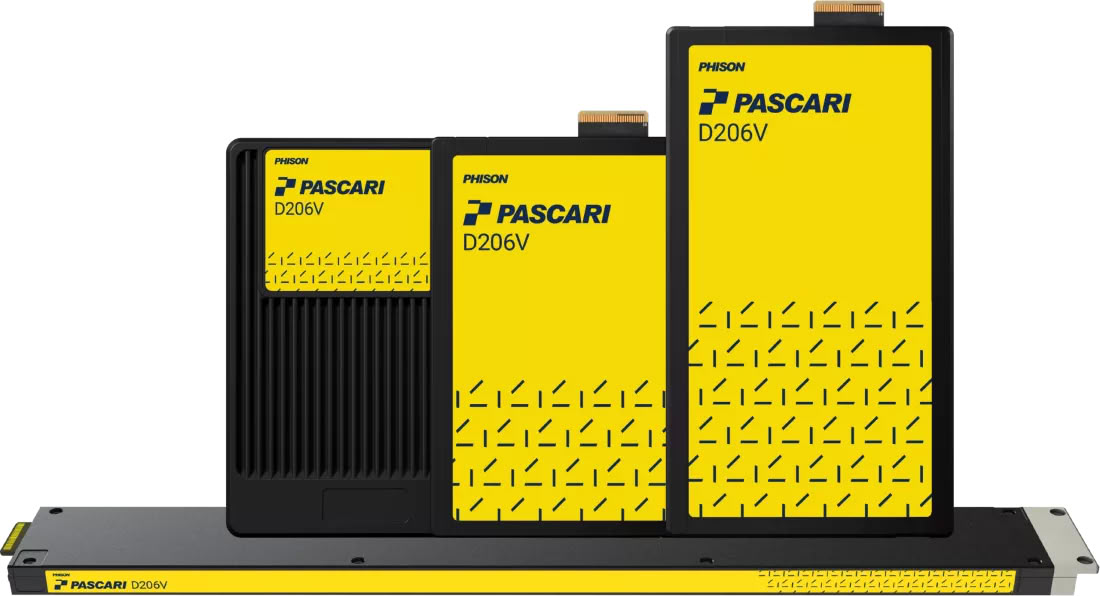
Phison unveiled an enterprise SSD design featuring an integrated neural processing unit capable of running AI frameworks directly on the drive. Presented at Supercomputing 2026 in Chicago, the storage device includes an NPU paired with 64 GB of onboard memory operating at 130 GB/s. The SSD supports PyTorch, vLLM, OpenVINO, and llama.cpp frameworks.
The computational storage approach processes data locally and returns only relevant results to the host system, rather than transferring entire datasets. Phison claims this architecture could reduce data transfers by 10 to 100 times for compatible workloads. The company measures NPU performance using DMIPS rather than the more common TOPS metric.
Phison also demonstrated additional storage innovations at the event, including a mixed media design combining high-endurance pSLC and QLC flash under a single controller, and a PCIe Gen 6 X3 controller. The company has not yet disclosed specifications for the AI-capable SSD, including its controller type, interface standard, form factor, or memory configuration. These remain developmental projects rather than finalized products.
What happened
Everyone's going all in on AI, so SSD manufacturers were not going to be left behind. Phison has detailed an enterprise SSD design that can run AI frameworks on the drive itself. At the Supercomputing 2026 (SC26) event in Chicago, the company showed off the computational storage design that hosts both an NPU and 64 GB of onboard memory running at 130 GB/s. It also supports PyTorch, vLLM, OpenVINO, and llama.ccp. Phison says this SSD could cut data transfers by 10 to 100 times for suitable workloads. It achieves that by scanning and processing the dataset in parallel, so it only sends back the relevant results instead of moving the entire dataset over the host.
How this story arrived
Ordered by when each source was first observed, which is what the velocity figure is computed from. Publishers backdate; observed order does not.
- 01 Techpowerup first seen Phison Previews an SSD That Runs AI Frameworks on Its Own NPU
Overclock clusters coverage from independent sources and grades it automatically. The figures above are computed, not editorial. This page summarises and links to reporting by the outlets named — follow the links for the original work.