
Microsoft to Use Intel's EMIB Advanced Packaging Technology
Microsoft announced today that it will officially adopt Intel Foundry's Embedded Multi-die Interconnect Bridge (EMIB) advanced packaging technology…
Why am I seeing this Ranked on source trust — TechPowerUp
It ranks mainly on source trust: TechPowerUp is the most reliable outlet we track on this subject, and is the only one on the story so far.
Single-sourced. No second organisation has confirmed it yet.
Link-outLink-out, because only one organisation carries it and no first-party source is on it. Link-out means we point at the publisher and say nothing of our own.
| Factor | Weight | Score | Contribution | Where it came from |
|---|---|---|---|---|
| Corroboration | 0.35 | 0.39 | +0.135 28% | 1 independent org on the story. Tier-3 aggregators never corroborate — they can show something is circulating, never that it is true. |
| Source trustleads | 0.25 | 0.80 | +0.200 42% | TechPowerUp is the highest-trust source on this story. Trust is taken from the best source, not averaged. |
| Pickup rate | 0.20 | 0.00 | +0.000 0% | One counted organisation, so there is no spread to measure — nothing has picked this up to set a rate. |
| Freshness | 0.20 | 0.70 | +0.140 29% | Halves every 10 hours from the newest item on the story. This is the only factor that rewards a story for nothing more than being recent. |
Corroboration counts distinct organisations, once each, and only from tiers 1 and 2. Freshness halves every 10 hours, so this ranking is a snapshot and will differ at the next build.
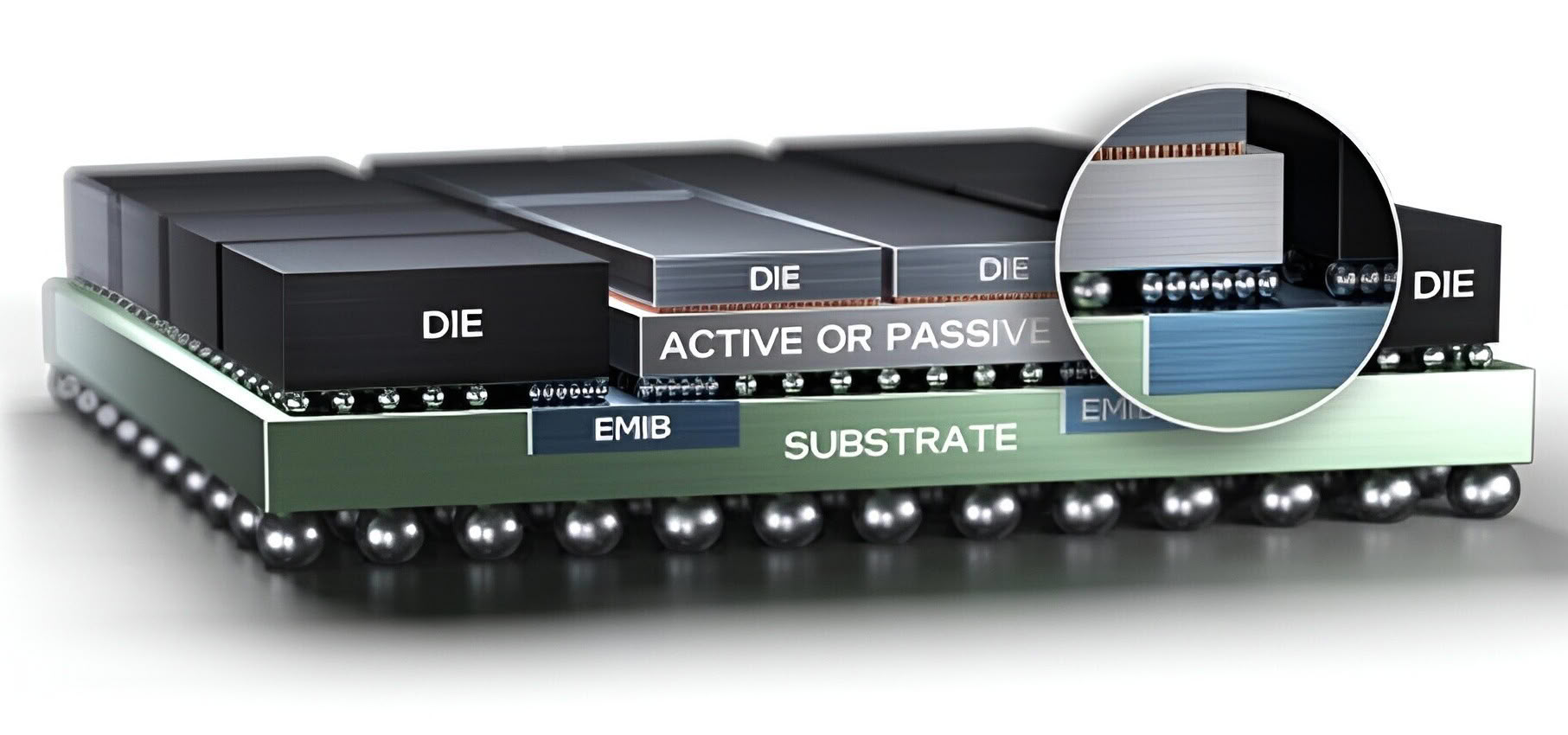
Microsoft will adopt Intel Foundry's Embedded Multi-die Interconnect Bridge technology for its custom Azure silicon. The company specifically selected EMIB-T, which uses through-silicon vias to deliver power vertically across stacked chips in 3D silicon modules. Next-generation versions of Microsoft's Maia 200 and Cobalt 200 processors will be packaged using this technology at Intel Foundry.
Microsoft confirmed it will continue using Intel Xeon processors and the upcoming Diamond Rapids Xeon 7 CPUs across Azure infrastructure. The company plans to integrate Intel Xeons with Compute Express Link to improve memory efficiency and system-level control in its data centers. Microsoft will also deploy Intel QuickAssist and Intel Trust Domain Extensions for confidential computing capabilities.
Testing showed a 2.5x performance increase on certain workloads, including SQL backups, through the use of CXL and related optimizations. Microsoft and Intel will collaborate on integrating these technologies across Azure's infrastructure to support the company's accelerators and CPU solutions for AI inferencing and agentic workloads.
What happened
Microsoft announced today that it will officially adopt Intel Foundry's Embedded Multi-die Interconnect Bridge (EMIB) advanced packaging technology for its custom silicon used in Azure. Specifically, Microsoft will use Intel's EMIB-T, which includes through-silicon vias (TSVs) to enable vertical power delivery across multiple stacked chips, supporting the concept of vertical power delivery for 3D silicon modules at the package level. As a reminder, Microsoft's fleet of custom silicon solutions includes valuable accelerators, such as the current Maia 200, which powers AI inferencing workloads like large-scale reasoning, and the Cobalt 200 CPUs, designed for agentic workloads.
How this story arrived
Ordered by when each source was first observed, which is what the velocity figure is computed from. Publishers backdate; observed order does not.
- 01 Techpowerup first seen Microsoft to Use Intel's EMIB Advanced Packaging Technology
Overclock clusters coverage from independent sources and grades it automatically. The figures above are computed, not editorial. This page summarises and links to reporting by the outlets named — follow the links for the original work.