
Apple held an invitation-only event in Tribeca this morning under the tagline "Welcome home", and published four press releases at once. The pre-event reporting had expected three products and a name, "HomePad", that turned out not to exist. What arrived was a 7-inch touchscreen called Apple HomeView, a fourth-generation Apple TV 4K, a second-generation HomePod mini, and Apple Home Collection — a set of cameras, thermostats, sensors, a doorbell and a door lock that Apple did not build.
The common thread is Siri AI, the assistant Apple shipped in September. It is the reason the event exists, and it is also the thing that makes the four announcements sit together awkwardly, because it arrives on each of them at a different time, and on one of them not at all.
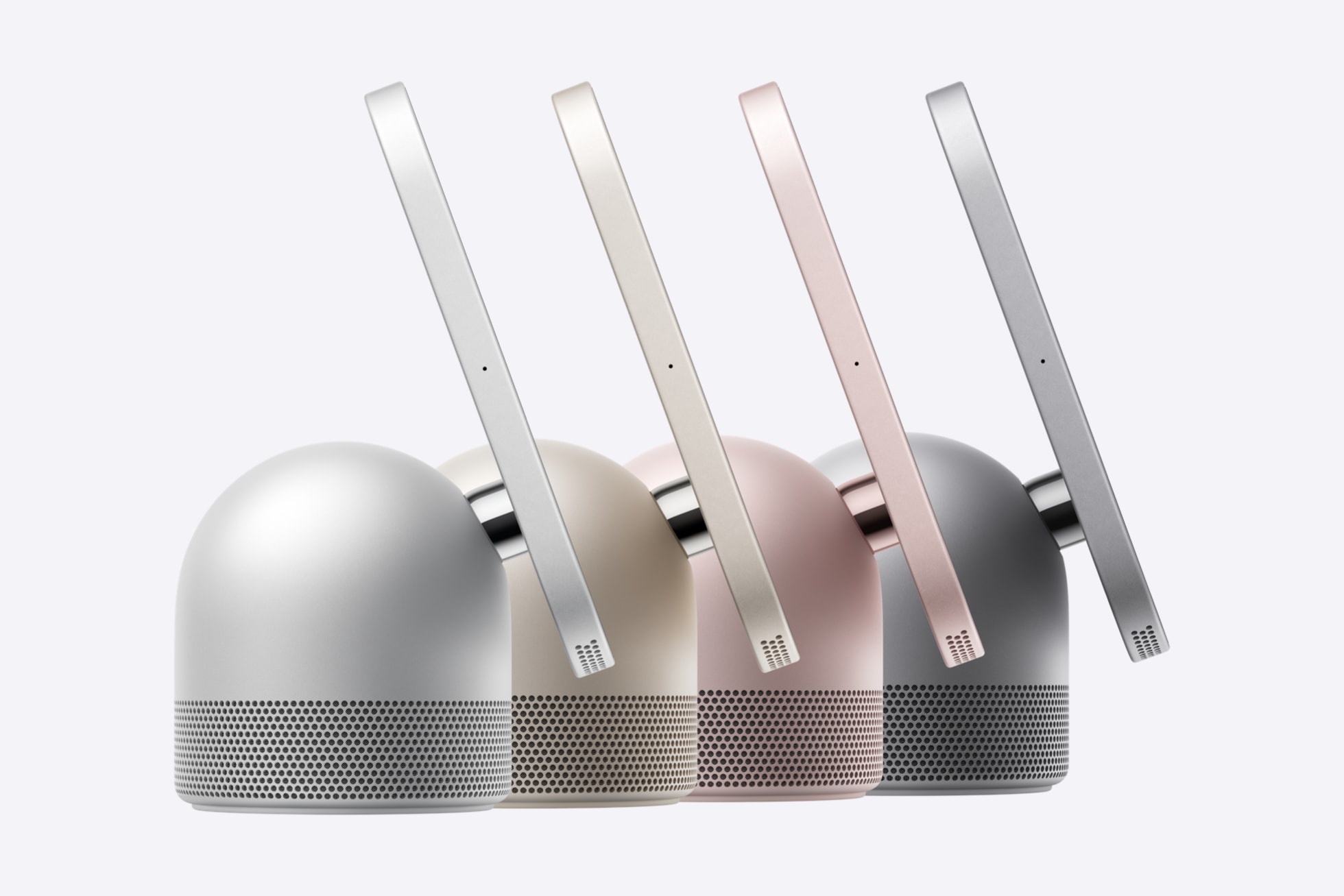
Start with the device the event was built around. Apple HomeView is a 7-inch Liquid Retina display on an aluminium body with a domed speaker base, joined by a stainless steel hinge that tilts. It runs an A18 with Secure Exclaves, the silicon partition Apple uses to keep microphone data away from the rest of the system. It recognises up to six people by face and changes what it shows for each of them. It costs $299 in the United States in silver, starlight, rose pink and space gray, and there is a wall-mounted version at the same price.
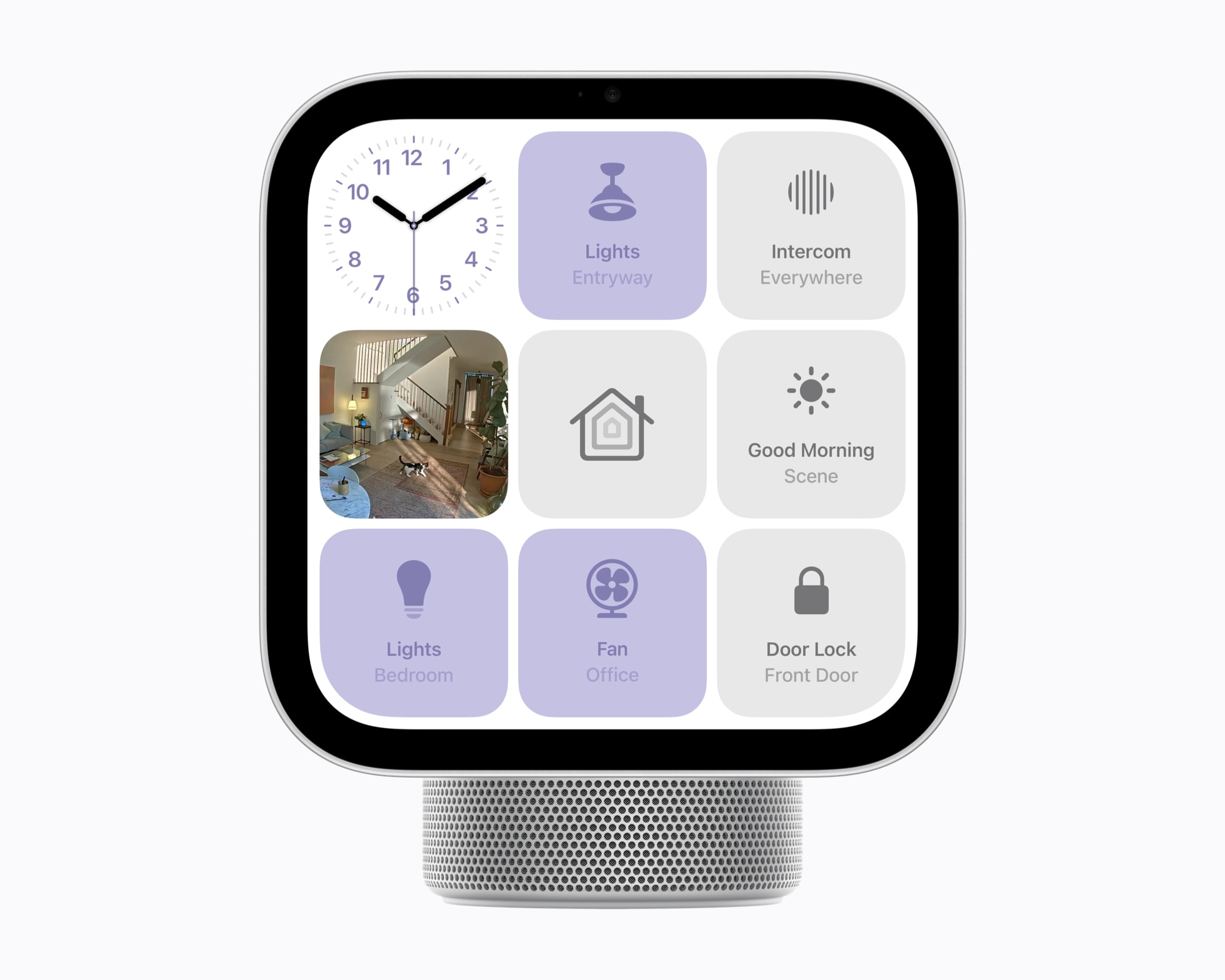
"Apple HomeView is designed to be shared by everyone in the home yet feel completely personal to each user," said Greg Joswiak, Apple's senior vice president of Worldwide Marketing.
It cannot be sold in the European Union. Apple's own release says so in a single unhedged sentence: "Apple HomeView is not available for sale in the European Union, as Siri AI is currently unavailable in iOS in the EU." It adds that "Apple is working constructively with the EU in an attempt to find a path forward." That is a product whose entire interface is built on an assistant, withheld from a market because the assistant is not there. Apple did not bury it in a footnote, which is worth noting on its own.
The new Apple TV 4K is the same $299 and the same 13 November date. It moves to an A19 — Apple claims up to 50 percent faster CPU and up to twice the GPU performance of the previous generation — and adds a dedicated AV1 decoder, three far-field microphones with echo cancellation, and Thread. With two HomePod mini 2 units it forms a four-speaker surround setup, front and rear.
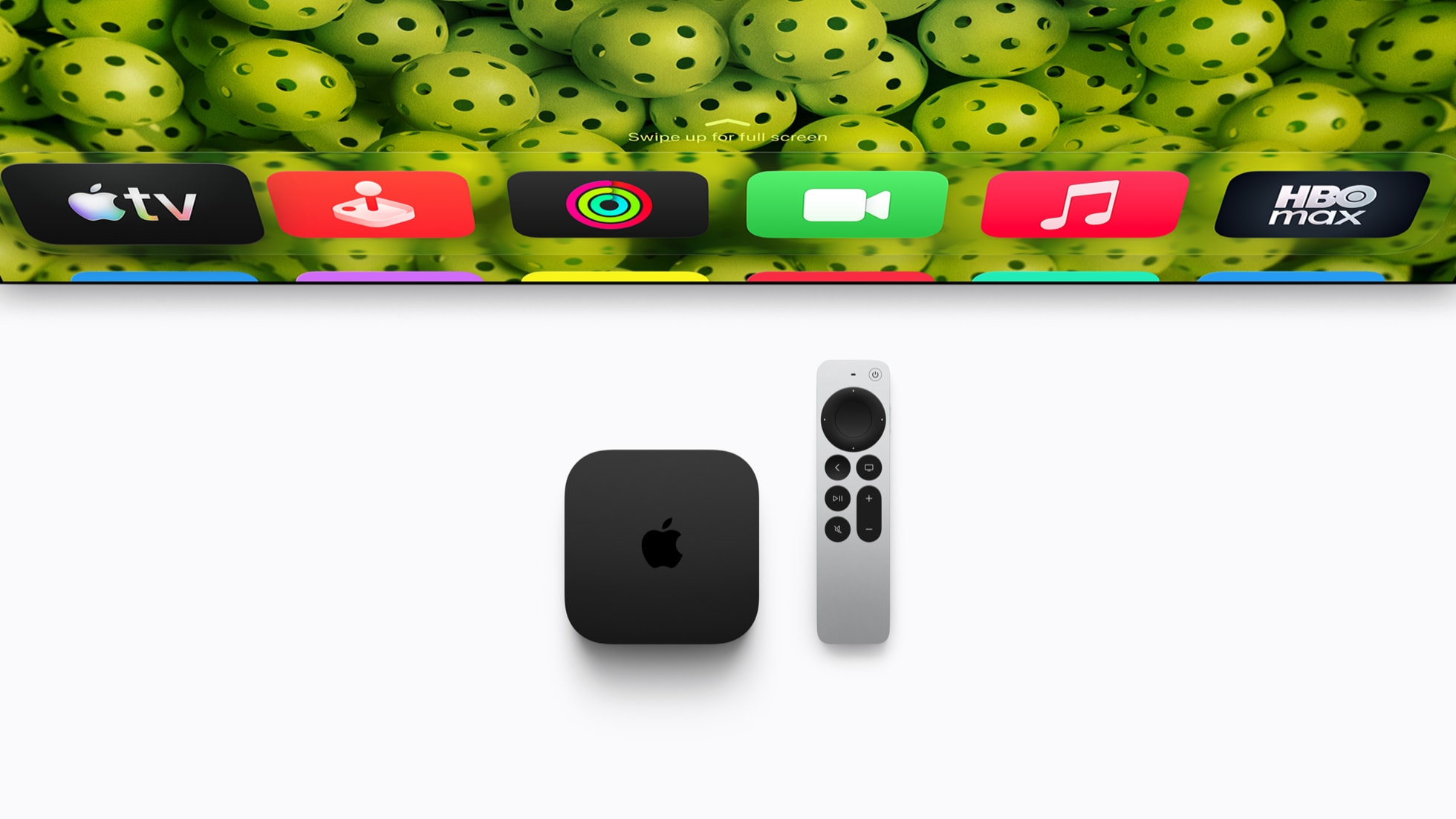
Here the assistant is a beta. Apple's own footnote reads: "Siri AI is available as a beta on Apple TV 4K (2nd generation or later)", in tvOS 27.2. "With Siri AI, finding something to watch becomes a full-screen, conversational experience," said Bob Borchers, Apple's vice president of Worldwide Product Marketing — a sentence describing software Apple is shipping as unfinished.
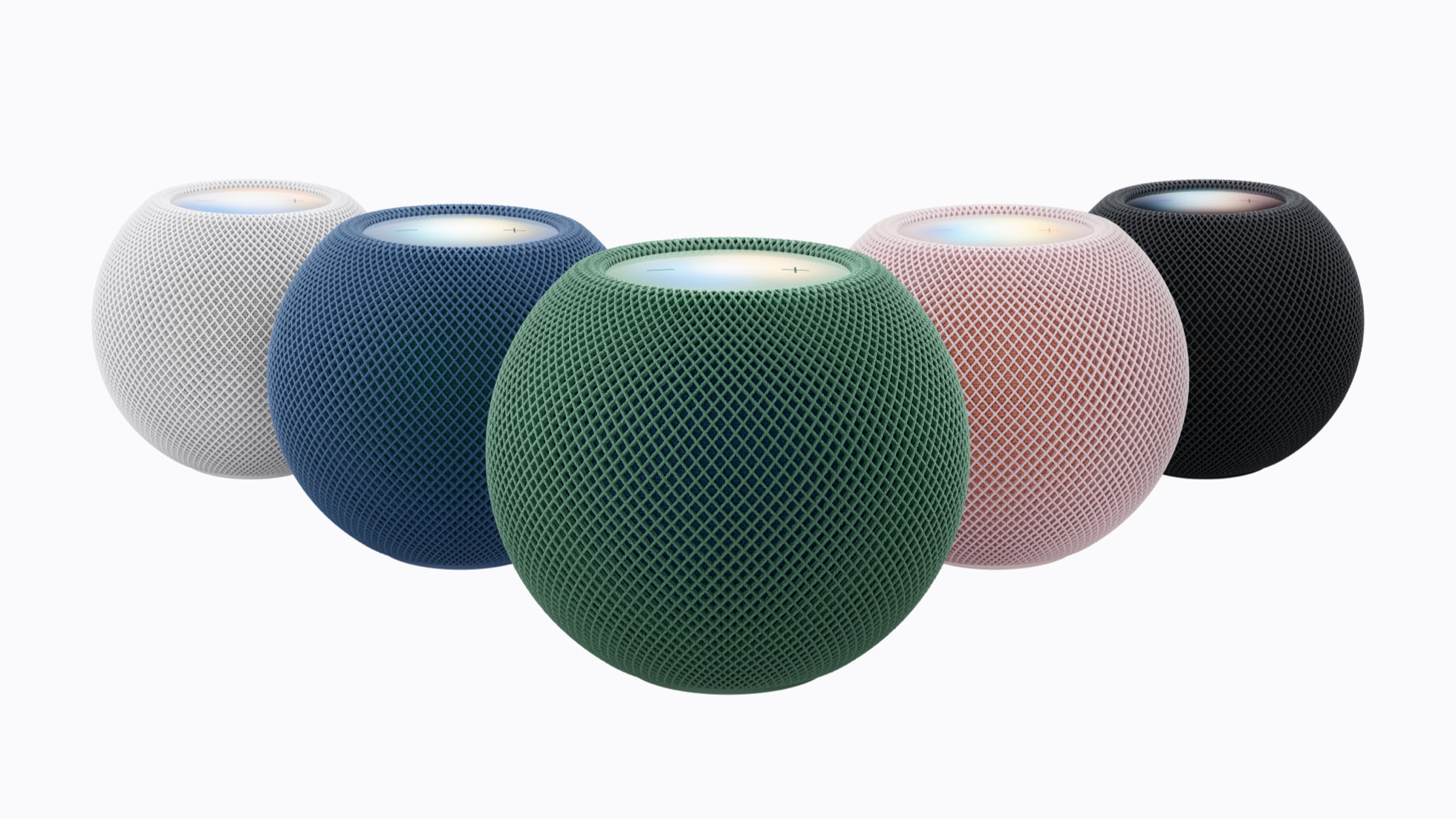
HomePod mini 2 is the cheapest thing announced and the first to arrive: $149, five colours, an S10 chip, pre-orders today and on sale 30 October. It does not have Siri AI. Apple says it is "coming to HomePod mini 2 in a future software update" and "will be available later as a free software update", with no date attached. A speaker launched at an event about a conversational assistant will spend its first stretch on sale without one.
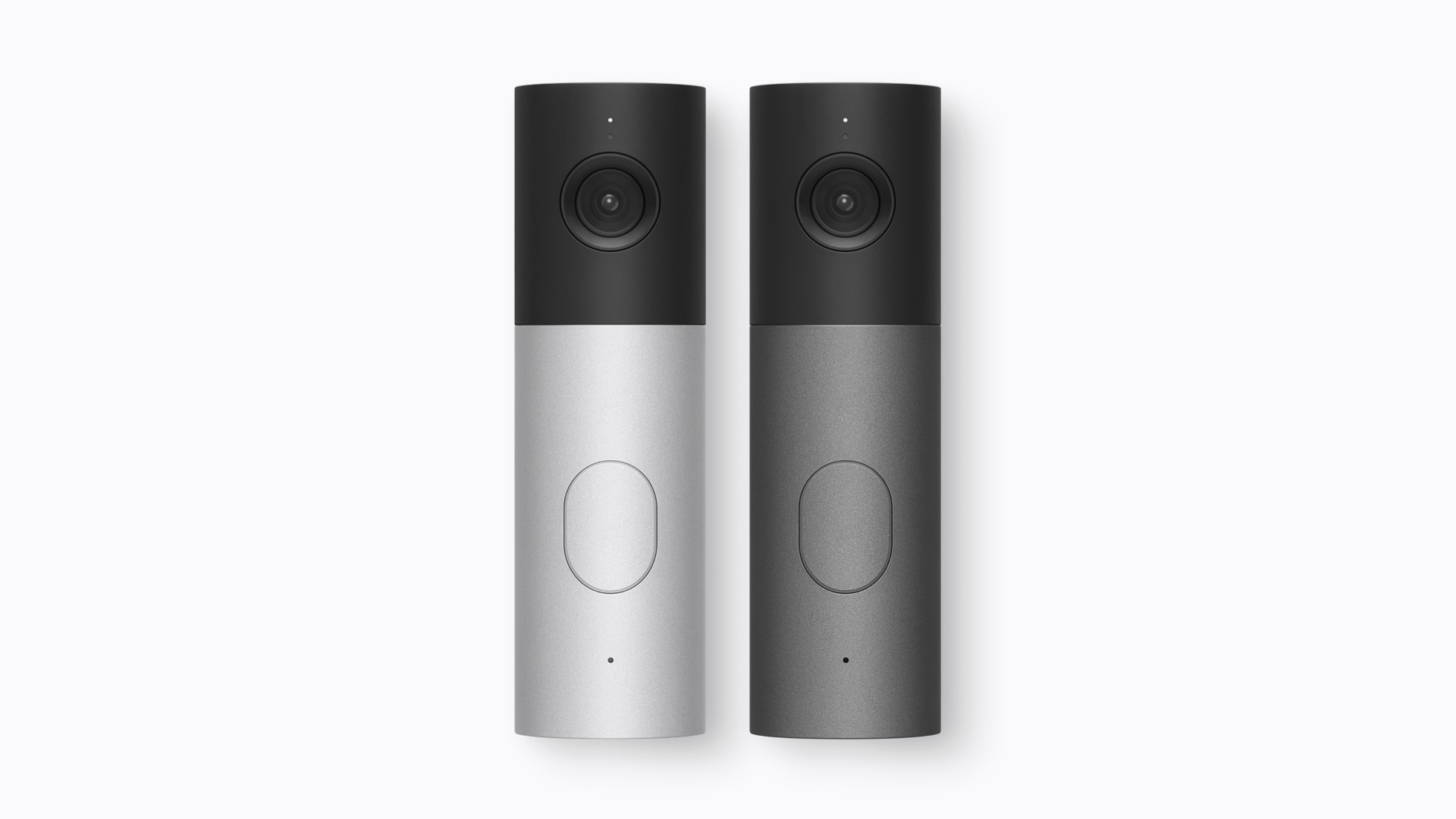
Apple Home Collection is the genuinely new move, and the easiest to misread from a price list. These are not Apple products. The release says the lineup was "designed in collaboration with LG Electronics and Schneider Electric" — LG builds the cameras, doorbell, lock, thermostat and temperature sensor; Schneider Electric builds a thermostat and room sensor. Apple sells them in its own stores under its own banner. Prices run from $39.95 for a temperature sensor to $399.95 for a floodlight camera, with the video doorbell at $249.95 and the deadbolt at $349.95. Everything in the lineup supports Thread; the lock, thermostats and sensors support Matter, and the lock supports Aliro. Shipping starts in December, with some accessories in early 2027, and ADT will install them for a fee from Apple Retail in the US this autumn.
Apple makes a specific privacy claim about that arrangement worth recording: Home app data is encrypted end-to-end, "so LG Electronics, Schneider Electric, and Apple can't read it."
What Apple did not publish is as notable as what it did. There is no driver count or frequency response for HomePod mini 2, no HDR format list, port list or storage tier for Apple TV 4K, and no full connectivity spec for HomeView. Those are ordinary omissions in a launch-day press release, and they are the numbers any buying decision actually turns on. They are absent here because they are absent at the source.
| Announced today | Siri AI at launch | On sale |
|---|---|---|
| Apple HomeView | Yes | 13 November |
| Apple TV 4K (4th gen) | Beta, on tvOS 27.2 | 13 November |
| HomePod mini 2 | No — "a future software update" | 30 October |
| Apple Home Collection | Not applicable | December |
Taken together, the four releases describe a coherent product line and an incoherent rollout. Apple has built the screen, the box, the speaker and the accessory catalogue for a home that runs on Siri AI. On 30 October the speaker ships without it. On 13 November the set-top box ships with it marked beta. And in the European Union, the centrepiece does not ship at all.