
Apple ran its September keynote at Apple Park this morning under the tagline "Surprise and shine", and the surprise was a folding iPhone at $1,999. It was not the only thing announced: the event covered five product lines and one software change that may end up mattering more than any of the hardware.
The headline is the iPhone Duo. It opens to a 7.6-inch Super Retina XDR display and closes to a 5.4-inch one, which Apple puts at 90 percent of the screen area of an iPhone 18 Pro, so the shut phone is a normal phone rather than the narrow strip earlier folding designs accepted. The frame is Grade 5 titanium, the hinge cover is 3D-printed, and Apple says the hinge has more than 100 components. The front is Ceramic Shield 2, rated at three times the scratch resistance of the previous generation, and it is IP68, which Apple qualifies as a maximum depth of six metres for up to 30 minutes. Storage runs 256GB to 2TB, the colours are Star White and Night Sky, preorders open on 16 October and it ships on 23 October.
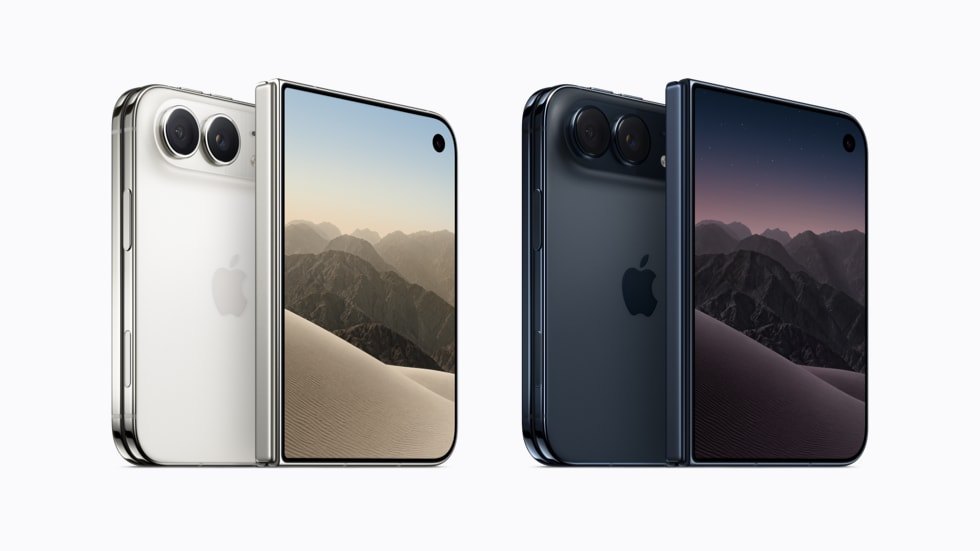
Two figures on that spec sheet pull against each other. Unfolded it is 5.2mm thick, which is genuinely thin; folded it is 11.3mm and it weighs 254 grams, heavier than any iPhone Apple currently sells. That is the physics of the format rather than a failing, but it is the trade a buyer is making. Battery is quoted three ways: up to 31 hours of video playback on the inner display, up to 44 hours on the outer, and up to 24 hours using both equally. Three numbers are more informative than one, because the answer genuinely does depend on which screen you use.
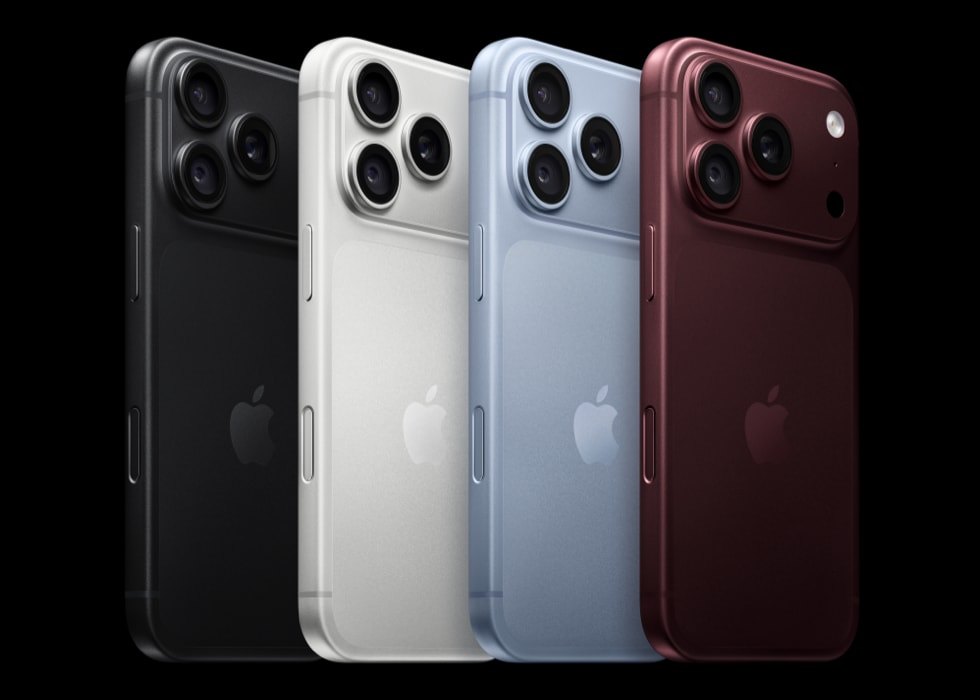
The iPhone 18 Pro and Pro Max share the same A20 Pro silicon on a 2-nanometre process, and the camera is the interesting part. The main 48MP sensor sits behind a variable aperture driven by six laser-cut blades, stepping between f/1.48, f/1.8 and f/4. Physical aperture control is ordinary on cameras and rare on phones, where depth of field is usually computed after the fact; this is a mechanism doing the work rather than the processor estimating it. Battery is up to 36 hours of video playback on the Pro and up to 45 on the Pro Max. Prices are $1,199 and $1,299, in black, silver, glacier and burgundy, with preorders on 12 September and availability on 18 September.
The Apple Watch Series 12 leads on sensing rather than speed. A new Health Sensing System reads heart rate every five seconds all day, takes heart-rate variability up to 24 times more often than before, and produces a Readiness score on a 0-to-10 scale returning one of four verdicts: Recover, Pace Yourself, Ready, or Go For It. Apple claims the most accurate heart rate sensing and step tracking in a smartwatch. It starts at $399, in 42mm and 46mm, and ships on 18 September.
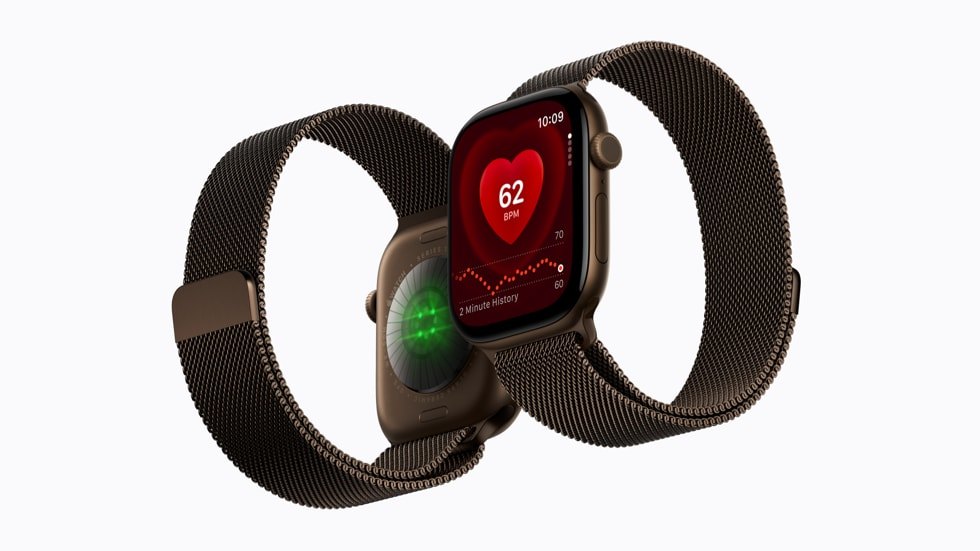
The Apple Watch Ultra 4 takes the same sensing system and the same S11 chip and builds endurance around it: more than two days of everyday use at up to 50 hours, up to 84 in Low Power Mode, up to 25 hours tracking a workout with full GPS and heart rate, and up to 45 hours in a maximum extended mode for long outdoor efforts. Apple also claims the most accurate on-device GPS in a sports watch. It is $799, in natural and black titanium, and ships on 18 September. AirPods 5 round out the hardware at $129, or $149 with a wireless charging case, on the same date; Apple says they remove up to 50 percent more external noise than AirPods 4 with Active Noise Cancellation, bringing ANC to the open-ear design rather than the sealed Pro shape.
The software announcement is the one to watch. A redesigned Health app arrives later this year with a Longevity tab, a Health Age reading that shows how metrics track against a user's actual age, and movement evaluations that assess flexibility, strength and balance using vision-based AI models. It also adds lab testing: over 50 biomarkers for $119, ordered through the Health app and drawn at roughly 2,000 Quest Diagnostics locations. Apple says it arrives later this year, starting in U.S. English.
That item is worth sitting with, because it falls on a line Apple has spent a decade drawing carefully. Apple's own release states that the Vitals app is "for wellness purposes only and not for medical use", and it names no FDA clearance or CE mark for the new sensing system. Meanwhile the same company is about to sell you a blood panel. The two are not in tension; the distinction is the point. Wellness features stay wellness features and make no diagnostic claim, while the actual clinical testing is performed by a certified laboratory already operating under that regulation. It is a careful arrangement rather than a loose one, and it is why the Readiness score is a suggestion and the blood panel is a result.
There is a cost to reckon with. A Duo, an Ultra 4 and AirPods 5 with the wireless case comes to $2,947 before tax. The Duo alone is $800 more than the entry iPhone 18 Pro — two-thirds again as much for the folding hinge and the second screen. Apple is also offering it on a lease through Klarna from $57.99 a month, which is a notable thing for a phone to need.
A few things about how the numbers are framed are worth knowing before the reviews land.
Apple publishes no fold-cycle rating for the Duo and makes no statement about the crease. For a first-generation folding phone that is the durability question buyers ask first, and there is no figure for it in the press release or the tech specs. Apple describes the hinge construction in some detail, so this reads less as evasion than as an industry convention — no manufacturer publishes a fold rating in a way that allows comparison. It does mean the hinge's working life is unknown until people have carried one for a year.
Apple also gives no battery capacity in mAh and no RAM figure for anything announced. That is long-standing practice rather than anything new here, and the company's argument has always been that a duration is more useful to a buyer than a capacity, which is fair enough. It also means every battery claim above is a duration Apple measured under conditions Apple chose.
The health accuracy claims rest on Apple's own study, conducted in July and August 2026, which the release states plainly. And there is a geography to some of this: Siri's new AI features launch in beta in English with five more languages in October, and Apple states they will not initially be available in the EU. The watches' Audio Intelligence carries the same exclusion, with no reason and no date given for either. European buyers are purchasing devices whose headline software is not switched on for them yet.
Finally, the qualifier attached to essentially every performance figure published today: "up to". Up to 20 percent faster CPU, up to 40 percent faster GPU, up to 31 hours, up to 45 hours, up to 24 times more often. This is normal, legally sensible and universal — every manufacturer writes specifications this way. It is simply the reason none of these figures can be treated as measurements until somebody outside Apple runs the test, and nobody has yet. The watches, phones and AirPods arrive on 18 September and the Duo on 23 October. That is when the numbers stop being claims.