
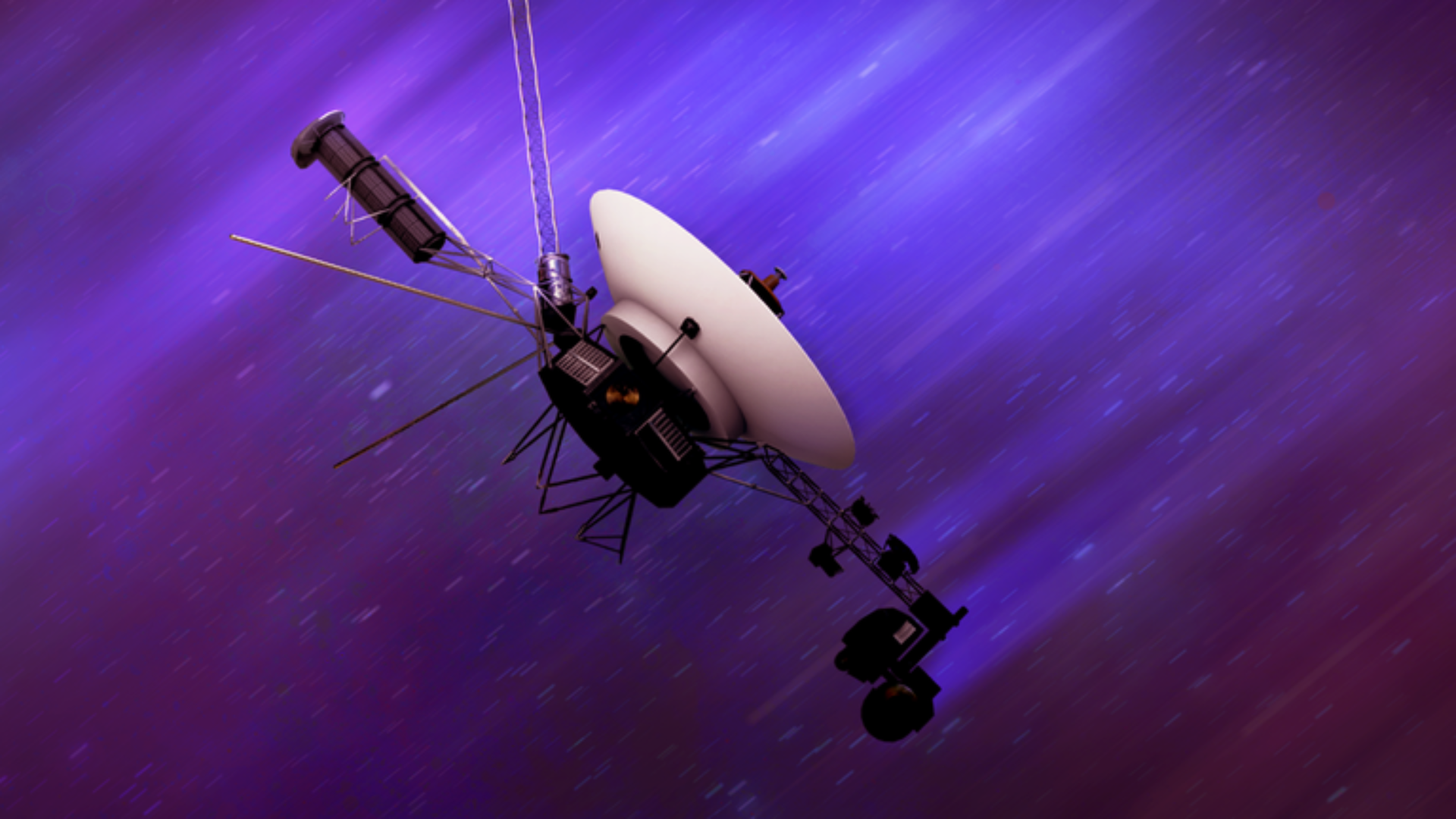
Voyager 1 probe to hit historic one light-day distance from Earth in 17 days — 49-year-old spacecraft travels 16 billion miles
It took the space probe nearly 50 years to get to one light-day, with NASA scientists and engineers going through lengths to ensure that it could…
Tomshardware.Com 2 versions
-
The headline was rewritten.
Voyager 1 probe to hit historic one light-day distance from Earth in 17 days — 49-year-old spacecraft travels 16 billion miles
It took the space probe nearly 50 years to get to one light-day, with NASA scientists and engineers going through lengths to ensure that it could keep operating for as long as possible.
-
Voyager 1 probe to hit historic one light-day distance from Earth in 17 days — 49-year-old spacecraft travels 16 billion miles and survives nearly ten times the length of its original five-year mission
It took the space probe nearly 50 years to get to one light-day, with NASA scientists and engineers going through lengths to ensure that it could keep operating for as long as possible.
Versions are compared on the headline and summary the publisher puts in their feed. An edit to the body of an article that leaves both untouched will not appear here.
Why am I seeing this Ranked on recency
It is here mostly because it is new. Freshness is the largest single contributor to its score, which means nothing about the story except that it is recent.
Nothing much is corroborating this yet. On a quiet day in business that is enough to reach the top of the section — recency, not significance, is doing the work here.
Link-outLink-out, because only one organisation carries it and no first-party source is on it. Link-out means we point at the publisher and say nothing of our own.
| Factor | Weight | Score | Contribution | Where it came from |
|---|---|---|---|---|
| Corroboration | 0.35 | 0.39 | +0.135 33% | 1 independent org on the story. Tier-3 aggregators never corroborate — they can show something is circulating, never that it is true. |
| Source trust | 0.25 | 0.44 | +0.110 27% | Tom's Hardware is the highest-trust source on this story. Trust is taken from the best source, not averaged. |
| Pickup rate | 0.20 | 0.00 | +0.000 0% | One counted organisation, so there is no spread to measure — nothing has picked this up to set a rate. |
| Freshnessleads | 0.20 | 0.84 | +0.168 41% | Halves every 10 hours from the newest item on the story. This is the only factor that rewards a story for nothing more than being recent. |
Corroboration counts distinct organisations, once each, and only from tiers 1 and 2. Freshness halves every 10 hours, so this ranking is a snapshot and will differ at the next build.
What happened
It took the space probe nearly 50 years to get to one light-day, with NASA scientists and engineers going through lengths to ensure that it could keep operating for as long as possible.
How this story arrived
Ordered by when each source was first observed, which is what the velocity figure is computed from. Publishers backdate; observed order does not.
- 01 Tomshardware first seen Voyager 1 probe to hit historic one light-day distance from Earth in 17 days — 49-year-old s
Overclock clusters coverage from independent sources and grades it automatically. The figures above are computed, not editorial. This page summarises and links to reporting by the outlets named — follow the links for the original work.