
(PR) TCL CSOT Announces World's First Mass Production of Ultrahigh-Mobility Oxide Panels at DTC2026
TCL CSOT became the world's first to achieve mass production of ultrahigh-mobility oxide technology (electron mobility of ~50 cm² V⁻¹ s⁻¹) on an…
Why am I seeing this Ranked on source trust — TechPowerUp
It ranks mainly on source trust: TechPowerUp is the most reliable outlet we track on this subject, and is the only one on the story so far.
Single-sourced. No second organisation has confirmed it yet.
Link-outLink-out, because only one organisation carries it and no first-party source is on it and the subject could not be identified from the text. Link-out means we point at the publisher and say nothing of our own.
| Factor | Weight | Score | Contribution | Where it came from |
|---|---|---|---|---|
| Corroboration | 0.35 | 0.39 | +0.135 29% | 1 independent org on the story. Tier-3 aggregators never corroborate — they can show something is circulating, never that it is true. |
| Source trustleads | 0.25 | 0.80 | +0.200 43% | TechPowerUp is the highest-trust source on this story. Trust is taken from the best source, not averaged. |
| Pickup rate | 0.20 | 0.00 | +0.000 0% | One counted organisation, so there is no spread to measure — nothing has picked this up to set a rate. |
| Freshness | 0.20 | 0.64 | +0.129 28% | Halves every 10 hours from the newest item on the story. This is the only factor that rewards a story for nothing more than being recent. |
Corroboration counts distinct organisations, once each, and only from tiers 1 and 2. Freshness halves every 10 hours, so this ranking is a snapshot and will differ at the next build.
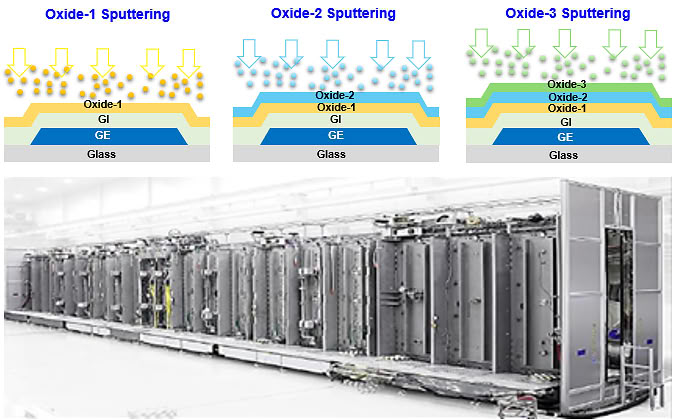
TCL CSOT has begun mass production of ultrahigh-mobility oxide panels on an 8.6-generation manufacturing line, achieving electron mobility of approximately 50 cm² V⁻¹ s⁻¹. This marks the first time this technology has exceeded the 50 cm² V⁻¹ s⁻¹ threshold in mass production, representing a technical breakthrough for the display industry.
The ultrahigh-mobility oxide technology enables higher drive currents than previous generations, which the company says allows display manufacturers to move beyond traditional design trade-offs. Previously, achieving high refresh rates often meant accepting higher power consumption, while maximizing resolution and brightness typically required sacrificing other performance aspects.
By reaching mass production of this technology, TCL CSOT claims the new oxide panels can deliver premium display properties simultaneously without the compromises that have historically constrained high-end display design.
What happened
TCL CSOT became the world's first to achieve mass production of ultrahigh-mobility oxide technology (electron mobility of ~50 cm² V⁻¹ s⁻¹) on an 8.6-generation line. The major technical breakthrough marks the first time high mobility oxide technology has gone beyond the 50 cm² V⁻¹ s⁻¹ threshold in mass production, presenting exciting new possibilities in display applications. Beyond 50 cm² V⁻¹ s⁻¹: Premium Displays Without the Compromise For years, the production of high-end displays has involved a series of trade-offs: high refresh rates versus lower power consumption, high resolution versus brightness, and narrow bezels versus cost.
How this story arrived
Ordered by when each source was first observed, which is what the velocity figure is computed from. Publishers backdate; observed order does not.
- 01 Techpowerup first seen (PR) TCL CSOT Announces World's First Mass Production of Ultrahigh-Mobility Oxide Panels at
Overclock clusters coverage from independent sources and grades it automatically. The figures above are computed, not editorial. This page summarises and links to reporting by the outlets named — follow the links for the original work.